






The moment the engine rumbles to life, an unmistakable sense of freedom washes over us. For many, driving is more than just a means of getting from point A to point B; it’s a symbol of our autonomy and our connection to the world.
When life introduces the challenge of limb loss, that sense of freedom can momentarily feel like it is idling in neutral.
At Aether Biomedical, we believe that innovation should serve one primary purpose: restoring that sense of independence. We often hear the same pressing question from our community: "Can you drive with a prosthetic hand?" The answer is a resounding, life-changing yes.
While the journey requires some adjustments, the road remains open to everyone willing to embrace the next generation of bionic technology.
In this guide, we want to walk beside you through the intersection of technology, law, and human resilience. We aren’t just looking at the mechanics of a car; we’re looking at how you regain your rhythm and "take back the power," as we say here at Aether. Let’s shift gears and look at the practicalities of getting you back behind the wheel with total confidence.
Understanding the Legal Landscape for Prosthetic Drivers
When we look at the legal side of things, the primary concern of any licensing authority is safety, not limitation. Most countries do not have a blanket ban on driving with a prosthetic hand. Instead, they focus on your functional ability to control the vehicle during an emergency. Medical conditions are taken into account when assessing driving ability after limb loss.
In many regions, we are required to notify the licensing agency about our physical changes. This isn’t a hurdle meant to take your license away, but rather a formal process to ensure you have the right tools.
We often see this result in a “restricted” license, which simply means the law recognizes you are safest when using specific adaptive equipment or high-performance bionics. It is a legal requirement to inform the transport authority of any change in medical condition that could impact driving ability after an amputation.
Medical certifications are usually the first step in this administrative process. A doctor or an occupational therapist will need to verify that your prosthetic is integrated well into your daily movements.
They want to ensure that your reaction times and physical control meet the standard safety benchmarks for everyone on the road. Consultations with medical professionals are necessary to complete medical records and assess driving ability after an amputation.
Occupational therapists may be involved in the process, and occupational therapy driving assessments may be required to evaluate the medical ability to drive after an amputation.
A driver rehabilitation specialist can provide a comprehensive evaluation to determine driving capabilities after an amputation. Driver rehabilitation specialists provide comprehensive evaluations to determine if an individual is a candidate for driving after an amputation.
Individuals may need to obtain updated permissions on their license to drive with adaptive equipment after an amputation.
How Modern Bionics Handle the Road
Not all prosthetic hands are created equal when it comes to the nuances of steering, shifting, and signaling. We find that the type of device you use significantly impacts how "natural" your daily driving experience feels. When we designed the Zeus hand, we focused on "human-centered design" to ensure the technology feels like an extension of you, not just a tool.
Body-powered prosthetics, which use cables and harnesses, offer "proprioceptive" feedback; you can "feel" the tension in the steering wheel through the harness. However, they might require more physical shoulder effort during long commutes or complex parallel parking.
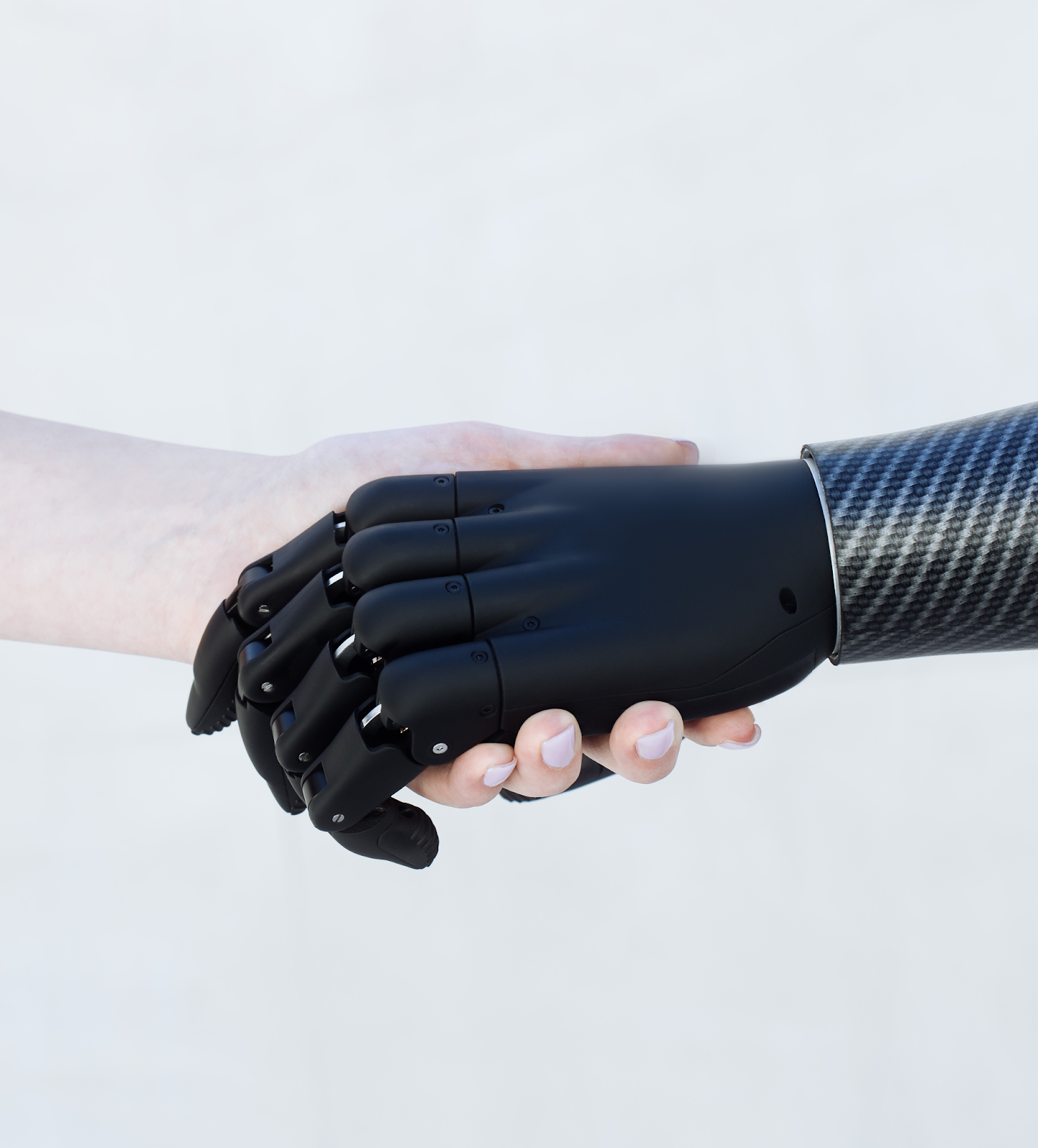
Myoelectric hands, like the Zeus, move by sensing muscle signals in your arm and offer incredible precision. With Zeus’s 14 predefined + 10 customised grip patterns, tasks like holding a key or gripping a steering wheel become intuitive.
We’ve engineered these devices to have a high grip force (up to 152N), which provides the security you need when making sharp turns or holding the wheel steady at high speeds.
Impact resistance is another factor we prioritize. On the road, vibrations and bumps are constant. Having a hand with compliant fingers that can flex upon impact, rather than breaking, is a game-changer for the longevity of your device and your peace of mind while driving.
Building Your Skills Through Training
Transitioning to driving with a prosthetic hand is a bit like learning to drive all over again. We encourage a patient, structured approach to building up your new version of muscle memory. It’s not just about the hand; it’s about how your whole body interacts with the car.
Learning to drive safely with a prosthetic hand and adaptive equipment is essential to ensure confidence and security on the road.
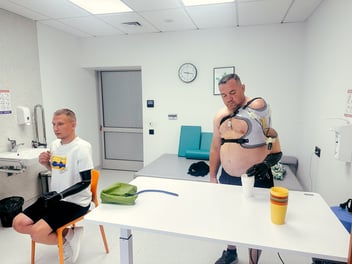
Occupational therapy plays a massive role in this phase. Therapists can help you work on the fine motor skills needed for turn signals, ignition keys, and seatbelt buckles. Because the Zeus is IoT-enabled, your clinician can even use our cloud-based platform to adjust your hand’s settings remotely, fine-tuning the sensitivity of your grip as you progress in your training.
Occupational Therapy Driver Rehabilitation Specialists (OT DRS) provide assessments and training for individuals with adaptive equipment, helping you develop the skills needed for safe and effective driving.
Adaptive driving schools are another incredible resource. These schools use dual-control vehicles, allowing an instructor to take over if you encounter a challenge or feel overwhelmed. This safety net allows you to build confidence in real-world scenarios like merging onto a busy interstate.
Driver rehabilitation training is often required when driving with adaptive equipment after limb loss.
Simulators are also becoming a standard part of the training toolkit. They allow us to practice reaction speeds in a “video game” setting before we ever hit the actual pavement. This helps bridge the gap between clinical therapy and the unpredictable nature of the road.
Safety Tips for the Bionic Driver
Safety is the cornerstone of a successful driving experience. We believe that a proactive, mindful mindset is the best way to stay safe and confident. Here are some of the most effective habits we’ve seen work for drivers in our community.
First, always check the physical fit and battery status of your device. With our Aether Battery System, you can monitor your power levels in real-time via an LED display. A quick check before you put the key in the ignition ensures you won't have any interruptions during your journey.
Regular maintenance is just as important as an oil change for your car. We designed our bionics with a modular "Lego-like" structure so that if a finger ever needs a repair, it can be done locally at your clinic in under 15 minutes. This minimizes your downtime and keeps you on the road.
General safe-driving tips also take on a new level of importance. We suggest increasing your following distance to give yourself more time to react to sudden moves. Staying in the right lane can also reduce the stress of frequent lane changes while you're still getting comfortable with your new setup.
Success Stories: Independence in Action
We are constantly inspired by the stories of individuals who refuse to let limb loss slow down their pace of life. From commuters to parents running school carpools, prosthetic users are proving their capabilities every single day.
Recent surveys of our Zeus users showed that 95% + of them found daily activities easier, including the ability to lift many objects and regain their professional opportunities.
One study actually found that drivers with prosthetics often develop higher levels of situational awareness. Because we are more conscious of our movements, we tend to be more deliberate and focused. This heightened attention can actually make us safer drivers than the general population.
At Aether, independence and mobility are our ultimate goals. When we see someone drive themselves to a job for the first time after an injury, the impact is profound. It’s not just about the car; it’s about regaining the ability to participate fully in the rhythm of life.
Regaining the ability to drive with a prosthetic hand promotes equal opportunities for individuals with limb loss or limb difference, enabling them to participate fully in work and community life.
Insurance and Financial Considerations for Prosthetic Drivers
Regaining your independence behind the wheel after limb loss or limb difference is a powerful milestone, but it’s important to consider the insurance and financial aspects that come with driving a vehicle modified for prosthetic devices or adaptive equipment.
Navigating these details can feel overwhelming, but with the right guidance and resources, you can ensure your mobility solutions are both safe and affordable.
When it comes to insurance, drivers with a prosthetic limb, upper limb amputation, or adaptive equipment may encounter specific requirements or restrictions from their insurance providers.
It’s essential to review your policy carefully and consult with your medical team or a driver rehabilitation specialist to confirm that all necessary vehicle modifications, such as hand controls or steering wheel modifications, are covered.
Some insurers offer specialized policies or riders for drivers with disabilities, which can help offset the costs of adaptive devices and car modifications.
Financial assistance is available to help make these essential vehicle adaptations more accessible. Organizations like the Amputee Coalition provide financial assistance resources, including grants, loans, and connections to national networks that support individuals with limb loss or limb amputation.
Many states also offer programs to provide financial assistance for vehicle adaptations, wheelchair accessible vehicles, and other special equipment.
Working with an occupational therapist or medical review board can help you determine exactly what modifications are needed for your specific medical history and driving goals, ensuring you receive proper support and the right equipment.
The following resources are helpful organizations and programs that can provide both financial and practical support for individuals seeking adaptive driving solutions:
- The National Mobility Equipment Dealers Association (NMEDA) helps consumers find certified vehicle modification installers or dealers.
- Centers for Independent Living support community living and independence for people with disabilities.
- Aging and Disability Resource Centers assist individuals with disabilities in accessing state and national grant programs.
- United Way 211 can connect individuals to local assistance programs for various needs.
- State Assistive Technology Programs help individuals acquire assistive and adaptive devices and funding.
Vehicle modifications can range from installing hand controls for limb amputees to adding spinner knobs or steering wheel modifications for upper limb amputees. While these adaptations are a game-changer for safe and comfortable driving, they can be costly. Fortunately, some vehicle manufacturers offer financing options or incentives for drivers with disabilities, and certain organizations provide discounts or promotions on adaptive equipment.
Ongoing maintenance is another important feature to consider. Regular checks and timely repairs of your adaptive equipment and vehicle modifications are crucial for safety and reliability. Some insurance providers include roadside assistance or emergency services in their policies, offering extra peace of mind for drivers with prosthetic limbs or adaptive devices.
Ultimately, planning and leveraging available resources can make a significant difference. By working closely with your driver rehabilitation specialist, occupational therapist, and medical team, you can navigate the insurance and financial landscape with confidence.
With the right support, financial assistance, and proper modifications, you’ll be well-equipped to enjoy a comfortable driving experience and the freedom that comes with it.
Community Resources for Prosthetic Drivers
Regaining your independence behind the wheel after limb loss or limb difference is about more than just the right prosthetic devices or vehicle modifications; it’s also about having a strong support system and access to the right resources.
Community organizations, professional specialists, and peer networks can be the game-changer that transforms your driving journey from daunting to empowering.
One of the most valuable resources for prosthetic drivers is the Amputee Coalition. This national network offers a wealth of information, advocacy, and support for individuals with limb loss, limb amputation, or limb difference.
Whether you’re looking for guidance on adaptive equipment, such as hand controls or steering wheel modifications, or need advice on navigating the process of returning to driving, the Amputee Coalition is a trusted partner.
Their resources include educational materials, connections to local support groups, and up-to-date information on legal requirements and financial assistance programs.
Another essential ally is the National Mobility Equipment Dealers Association (NMEDA). NMEDA connects you with certified vehicle modification dealers and installers, ensuring your car modifications, whether for a prosthetic leg, upper limb amputation, or wheelchair accessible vehicles, are completed to the highest safety standards. They also provide guidance on finding financial assistance, helping you access grants, funding, or discounts for adaptive devices and vehicle adaptations.
Professional support is equally important. Driver rehabilitation specialists work closely with you to assess your unique needs and recommend the best adaptive equipment.
Occupational therapists and physical therapists are key members of your medical team, helping you build the strength, mobility, and confidence needed for a comfortable driving experience.
Their expertise ensures that your vehicle is equipped with proper modifications tailored to your medical history and lifestyle, whether you’re driving an automatic transmission or exploring options for a stick shift.
Financial assistance can make a significant difference in your journey. Many organizations, including the Amputee Coalition and NMEDA, provide financial resources to help cover the cost of vehicle modifications, adaptive equipment, and even driver training.
Local non-profits and state programs may also offer grants or funding, making it easier to access the equipment and support you need to drive safely and independently.
Don’t underestimate the power of peer support. Local support groups and online communities offer a space to share driving tips, discuss equipment options, and connect with others who understand the challenges and triumphs of driving with a prosthetic limb. These connections can encourage, provide practical advice, and a sense of belonging as you navigate your mobility journey.
Finally, staying informed about your state’s legal requirements and working closely with your driver rehabilitation specialist and medical team will help ensure you meet all necessary guidelines for a driver’s license with proper modifications.
By leveraging these community resources, you can drive safely, enjoy equal opportunities, and experience the freedom that comes with a comfortable, well-equipped vehicle.
In summary, community resources are a vital part of the driving equation for individuals with limb loss or limb difference. With the right support, financial assistance, and adaptive equipment, you can confidently return to the road and embrace the independence you deserve.
Common Questions We Hear
Can someone with a prosthetic hand drive a car safely?
Yes, with the right combination of training and adaptive equipment, it is perfectly safe. Most drivers find that after a period of adjustment, the movements become second nature again. Safety is all about preparation and choosing the right tools for your specific needs.
What types of prosthetic hands are suitable for driving?
Myoelectric hands like the Zeus are ideal because they offer both the strength (152N) and the specific grip modes (like Tripod and Power grips) required for driving. Cosmetic prosthetics are generally not recommended for the primary task of steering.
Do you need special adaptations in the car?
While some people drive "stock" vehicles, many benefit from tools like spinner knobs. These adaptations reduce the physical strain and increase the speed of your response maneuvers. A professional evaluation will determine exactly what your specific vehicle needs to be "you-friendly."
How do I maintain my prosthetic for driving?
Check your battery and grip functionality weekly. Use devices like Zeus that allow for fast, local repairs so you are never without your hand for long periods. Keeping your software updated via cloud platforms also ensures your hand is performing at its peak.
The Road Ahead
Driving with a prosthetic hand is a journey of both physical adaptation and emotional growth. We have seen firsthand how the right tools can turn a daunting challenge into a simple, daily routine. By combining modern technology, legal awareness, and proper training, the "open road" remains exactly that, open to you.
If you are ready to take the next step toward reclaiming your independence, we encourage you to explore what modern bionics can do. At Aether Biomedical, we are committed to making this technology accessible for all. Your independence is waiting for you just around the next bend in the road.
The transition may require a little extra effort, but the destination, complete, unhindered mobility, is worth every mile. We believe in your ability to master the wheel and navigate your future with absolute confidence. Let’s get you back in the driver’s seat where you belong.
Ready to move from “maybe someday” to “let’s do this”? Speak with your clinician about advanced bionic options like the Zeus hands and ask how proper training and setup can support safe, confident driving. Independence doesn’t happen by accident; it starts with a decision and the right technology behind it.

-2.png?width=352&name=unnamed%20(1)-2.png)